What if the most important part of Daniel 2 isn’t the statue?
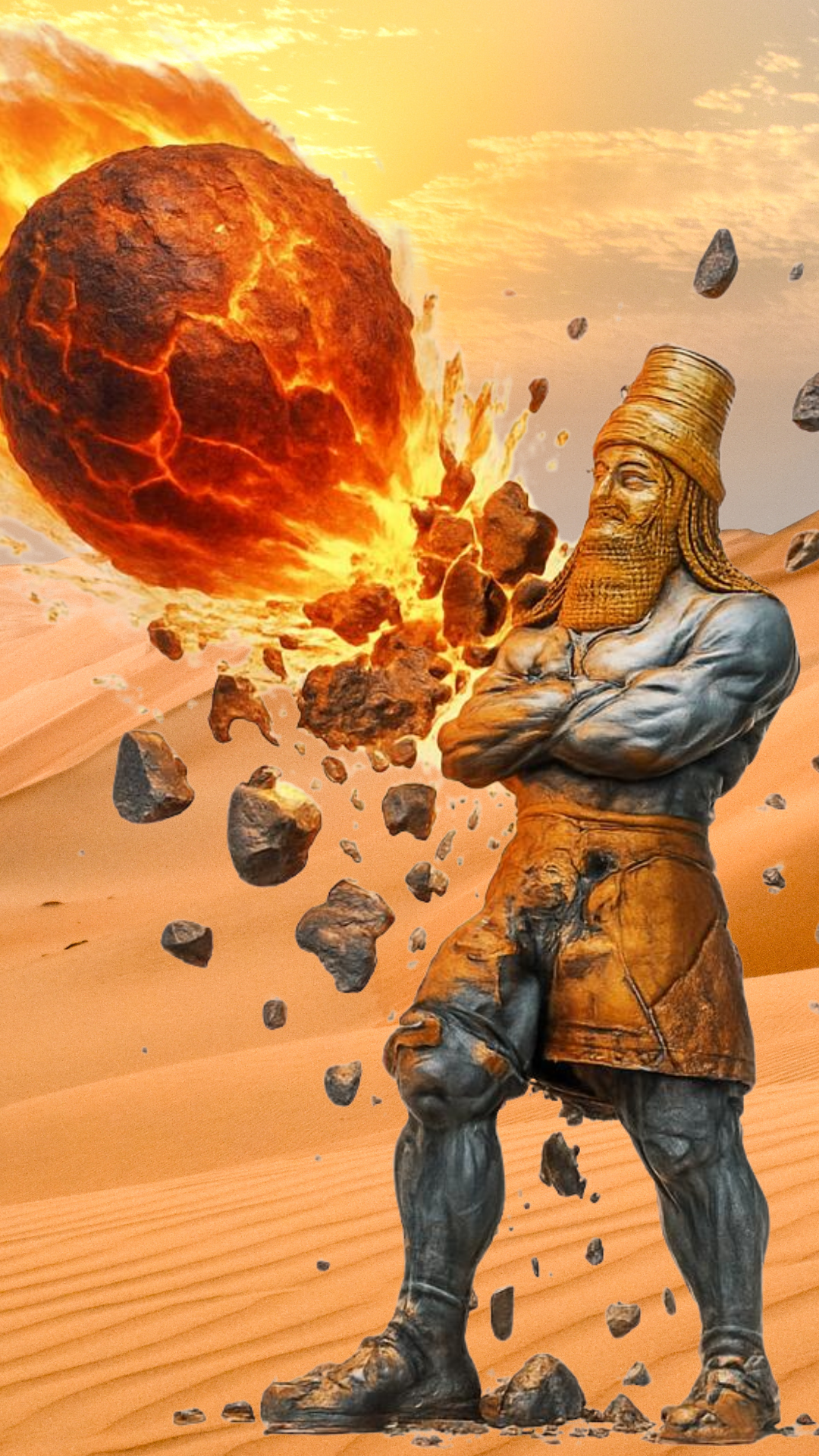
The statue is certainly the part most people remember. Nebuchadnezzar sees an enormous image with a head of gold, a chest and arms of silver, a middle of bronze, legs of iron, and feet made partly of iron and clay. Then a stone appears, strikes the image, and brings the entire thing crashing down. The stone eventually becomes a great mountain that fills the earth.

It is one of the most recognizable visions in the book of Daniel, and it has generated centuries of discussion about the identity of the kingdoms represented by the different parts of the statue.
Those questions are worth studying. Daniel himself gives Nebuchadnezzar an interpretation, and the historical kingdoms represented in the vision help us understand what God was revealing about the future.
There is another theme in the chapter, though, that deserves our attention before we start working through the statue.
Daniel 2 begins with a problem that human wisdom cannot solve.
Nebuchadnezzar wants his wise men to tell him what he dreamed and then explain its meaning. They cannot do it. Their response eventually reveals why this demand is impossible from a human perspective:
“There is not a man on earth who can meet the king’s demand… The thing that the king asks is difficult, and no one can show it to the king except the gods, whose dwelling is not with flesh.”
Daniel 2:10-11, ESV
The wise men of Babylon have reached the limits of what they know.
Daniel 2 is going to show us what happens when human wisdom reaches its limit and God chooses to reveal what human beings could never discover on their own.
The Wise Men of Babylon Cannot Help
Nebuchadnezzar’s dream has disturbed him, and he wants an answer.
He calls the magicians, enchanters, sorcerers, and Chaldeans and tells them what he expects. They need to identify the dream before they can interpret it.
The demand terrifies them because their usual methods cannot help.
If Nebuchadnezzar told them the dream, they could consult their traditions and attempt to interpret the symbols. He refuses to give them that information. He wants them to demonstrate that their claims to wisdom are genuine.
The Chaldeans eventually tell him that no ordinary person can do what he is asking.
Their conclusion is revealing. They recognize that the information Nebuchadnezzar wants lies beyond human knowledge.
That is exactly the point at which Daniel enters the story.
Daniel’s Response Is Prayer
When Daniel learns that the king has ordered the execution of the wise men, he asks for an opportunity to provide the answer.
Then he gathers Hananiah, Mishael, and Azariah and asks them to seek mercy from God concerning the mystery.
Daniel understands that the answer cannot be found through human ability alone. He turns to the God of heaven.
God then reveals the mystery to Daniel in a vision during the night.
Daniel’s response is worship:
“Blessed be the name of God forever and ever,
to whom belong wisdom and might.”
Daniel 2:20, ESV
Daniel continues:
“He reveals deep and hidden things;
he knows what is in the darkness,
and the light dwells with him.”
Daniel 2:22, ESV
This tells us how Daniel understands what has happened.
The mystery was hidden from the wise men of Babylon, but it was known to God. Daniel has received the answer because God has revealed it.
That distinction becomes important when Daniel finally stands before Nebuchadnezzar.
“There Is a God in Heaven”
The king asks Daniel whether he can tell him the dream and its interpretation.
Daniel begins by acknowledging the limits of human wisdom:
“No wise men, enchanters, magicians, or astrologers can show to the king the mystery that the king has asked…”
Daniel 2:27, ESV
Then he tells Nebuchadnezzar where the answer comes from:
“But there is a God in heaven who reveals mysteries…”
Daniel 2:28, ESV
That sentence captures one of the major themes of Daniel.
God knows what human beings cannot know.
He knows the mystery hidden from Babylon’s wise men. He knows the future kingdoms that will follow Babylon. He knows the rise and fall of rulers and empires.
Daniel is the messenger who communicates that revelation, while God remains the source of the knowledge.
That is why Daniel’s prayer in verses 20-23 matters so much. Before he ever stands before the king, Daniel has already given God the credit.
“For you have given me wisdom and might, and have now made known to me what we asked of you…”
Daniel 2:23, ESV
Daniel knows where his wisdom came from.
The Statue Represents Earthly Kingdoms
Nebuchadnezzar’s dream contains a massive statue.
Its head is gold. Its chest and arms are silver. Its middle and thighs are bronze. Its legs are iron, and its feet contain a mixture of iron and clay.
Daniel identifies Nebuchadnezzar as the head of gold:
“You, O king, the king of kings, to whom the God of heaven has given the kingdom, the power, and the might, and the glory…”
Daniel 2:37, ESV
That description of Nebuchadnezzar’s authority is important because Daniel immediately places Babylon’s power under God’s authority. Nebuchadnezzar rules because God has given him the kingdom.
Daniel then tells him that another kingdom will arise after his own, followed by another and then another.
There has been considerable debate over the identity of these kingdoms. Many Christian interpreters understand the sequence as Babylon, Medo-Persia, Greece, and Rome. Other interpretations have been proposed, especially concerning the later portions of the statue.
Whatever position one takes on those details, Daniel’s main point is clear. The kingdom represented by the head of gold will not last forever, and neither will the kingdoms that follow it.
The statue represents the succession of human powers across history.
The Stone Changes Everything
Then the dream takes a dramatic turn.
Daniel sees a stone that is:
“cut out by no human hand”
Daniel 2:34, ESV
The stone strikes the feet of the statue, and the entire image collapses.
Daniel describes the result:
“Then the iron, the clay, the bronze, the silver, and the gold, all together were broken in pieces, and became like the chaff of the summer threshing floors; and the wind carried them away, so that not a trace of them could be found.”
Daniel 2:35, ESV
The image had represented kingdoms that would exercise real authority. They would govern people, command armies, control territories, and shape history.
Yet the vision places all of them within the limits of God’s sovereignty.
They will come to an end.
The stone, however, has a very different future.
Daniel explains:
“And in the days of those kings the God of heaven will set up a kingdom that shall never be destroyed…”
Daniel 2:44, ESV
This is the great contrast of the vision. Human kingdoms have a beginning and an end. God establishes a kingdom whose existence does not depend upon the strength of a human ruler.
Daniel continues:
“It shall stand forever.”
Daniel 2:44, ESV
That is the kingdom represented by the stone.
Babylon Must Have Looked Permanent
This would have been a striking message for Daniel and the other Jewish exiles.
They were living in Babylon.
Babylon had conquered Jerusalem. Its king had taken members of Judah’s royal and noble families into captivity. The empire had enough military and political strength to make its rule seem secure.
Nebuchadnezzar himself probably had little reason to think Babylon’s power would soon disappear.
God gave him a different perspective.
Babylon was part of the story, but it was not the end of the story.
The same is true of the kingdoms that would follow it. Each would have its period of authority, and each would eventually give way to another power.
Daniel’s vision places all of them beneath the authority of the God who revealed the future to him.
The Limits of Human Wisdom
The statue receives most of the attention when Daniel 2 is discussed, but the chapter began somewhere else.
It began with the failure of Babylon’s wise men.
That failure is important because Daniel is not presented as a man who possesses unlimited wisdom. He receives knowledge from God.
The wise men could not tell Nebuchadnezzar what he had dreamed. Daniel could, because God revealed the mystery.
This is why Daniel’s own response is so important. He does not treat the revelation as evidence of his own superiority. His prayer gives the credit to God, and when he speaks to Nebuchadnezzar, he points the king toward the God of heaven.
The chapter therefore gives us a healthy view of human wisdom.
Learning matters. Intelligence matters. Daniel was well educated and clearly possessed significant ability. Yet there are limits to what human beings can discover.
God does not have those limits.
He knows the things that are hidden from us.
God Knows the Future
Daniel 2 also connects God’s knowledge with His rule over history.
God can reveal the succession of kingdoms because those kingdoms exist within His authority.
Daniel tells Nebuchadnezzar:
“The God of heaven has given you the kingdom…”
Daniel 2:37, ESV
That statement places Babylon within God’s larger purpose.
Nebuchadnezzar has power, but he did not create the authority he possesses. His kingdom will eventually pass to another kingdom, and that kingdom will also pass away.
Daniel knows this because God has shown him what lies ahead.
The future is not a mystery to God.
That matters when we consider the world around us. We often see events from a very limited perspective. We know what has happened, we can observe what is happening, and we make our best judgments about what may happen next.
God sees the whole course of history.
Daniel 2 gives us a glimpse of that larger perspective.
The Kingdom of God
The stone in Daniel 2 points us toward the biblical theme of God’s kingdom.
When Jesus begins His public ministry, He announces:
“The time is fulfilled, and the kingdom of God is at hand; repent and believe in the gospel.”
Mark 1:15, ESV
The kingdom Jesus announces is not another earthly empire taking its place among the kingdoms of Daniel’s vision. His ministry reveals the reign of God breaking into history.
Jesus teaches about the kingdom throughout the Gospels, and the New Testament identifies Him as the King whose reign will endure.
Hebrews 12:28 speaks of believers receiving:
“a kingdom that cannot be shaken”
Hebrews 12:28, ESV
That gives us a helpful connection back to Daniel 2.
The kingdoms represented by the statue are subject to change. God’s kingdom has a permanence that earthly kingdoms cannot possess.
Why Daniel 2 Matters Today
Daniel 2 can easily become a study of prophecy charts, historical timelines, and debates over the identity of the kingdoms.
Those questions have their place. They can help us understand how Daniel’s prophecy relates to the history of the ancient world.
The chapter also asks us to step back and consider what we are trusting.
Human beings place a great deal of confidence in power and knowledge. We trust governments to provide stability. We trust institutions to endure. We trust our own intelligence when we face difficult decisions.
Daniel 2 gives us a reason to hold those things with humility.
Human wisdom has limits.
Human power has limits.
God does not.
That does not mean we stop thinking carefully about the world or become indifferent to what happens around us. It means that we understand those things within the larger reality of God’s rule.
Nebuchadnezzar was living at the height of Babylon’s power when he received this dream. From his perspective, Babylon was the dominant power of the age.
God showed him that Babylon was one kingdom among several.
Then God showed him something greater.
A kingdom that would not be replaced.
The Kingdom That Stands Forever
The most important part of Daniel 2 may not be the statue itself.
The statue gives us a picture of the kingdoms that occupy the pages of human history. They possess real authority, and their actions matter. Yet none of them can claim permanence.
The stone points us toward something else.
Daniel says:
“And in the days of those kings the God of heaven will set up a kingdom that shall never be destroyed.”
Daniel 2:44, ESV
That is where Daniel wants our attention.
God knows the mysteries that human wisdom cannot solve. He governs the history that human rulers believe they control. He establishes a kingdom that will outlast every earthly kingdom.
For Daniel and the other exiles, Babylon was their present reality. God’s kingdom was their hope.
That same perspective gives Christians confidence today.
The world can change in ways we cannot predict. Leaders come and go, governments rise and fall, and the things that seem secure can change very quickly. We do not know everything that lies ahead.
God does.
Daniel 2 reminds us that history is moving according to His purposes, and the final kingdom belongs to Him.
The statue falls. The kingdom of God stands forever.
Leave a Reply