If your church stopped singing this Sunday, how long would it take before someone noticed?
Probably a few minutes.
Now imagine your church stopped celebrating Communion. A month passes. Then two. Maybe six.
How long would it take before people started asking why?
Tim Chester raises a similar question near the beginning of Truth We Can Touch: How Baptism and Communion Shape Our Lives, and it exposes something important about the way many Christians think about these practices.

Amazon Affiliate Link: Buy here!
Christianbook Affiliate Link:
Most of us would say Baptism and Communion matter. We may have strong opinions about how they should be practiced, who should participate, and what they mean.
Yet I am not sure we always understand why Jesus gave them to his church in the first place.
That is the question at the heart of Truth We Can Touch.
Chester explores what Baptism and Communion communicate about the Gospel, what happens when Christians participate in them, and why these physical practices should occupy a meaningful place in the life of the church.
I went into the book already believing Baptism and Communion were important.
I finished it realizing I had probably underestimated both.
The Gospel in Physical Form
The central idea of Truth We Can Touch is surprisingly simple.
We are physical people.
When Christians gather, we hear the Word preached. We pray. We sing. We encourage one another. Through all of these practices, we hear and respond to the truths of the Gospel.
Baptism and Communion involve our bodies in a particularly tangible way.
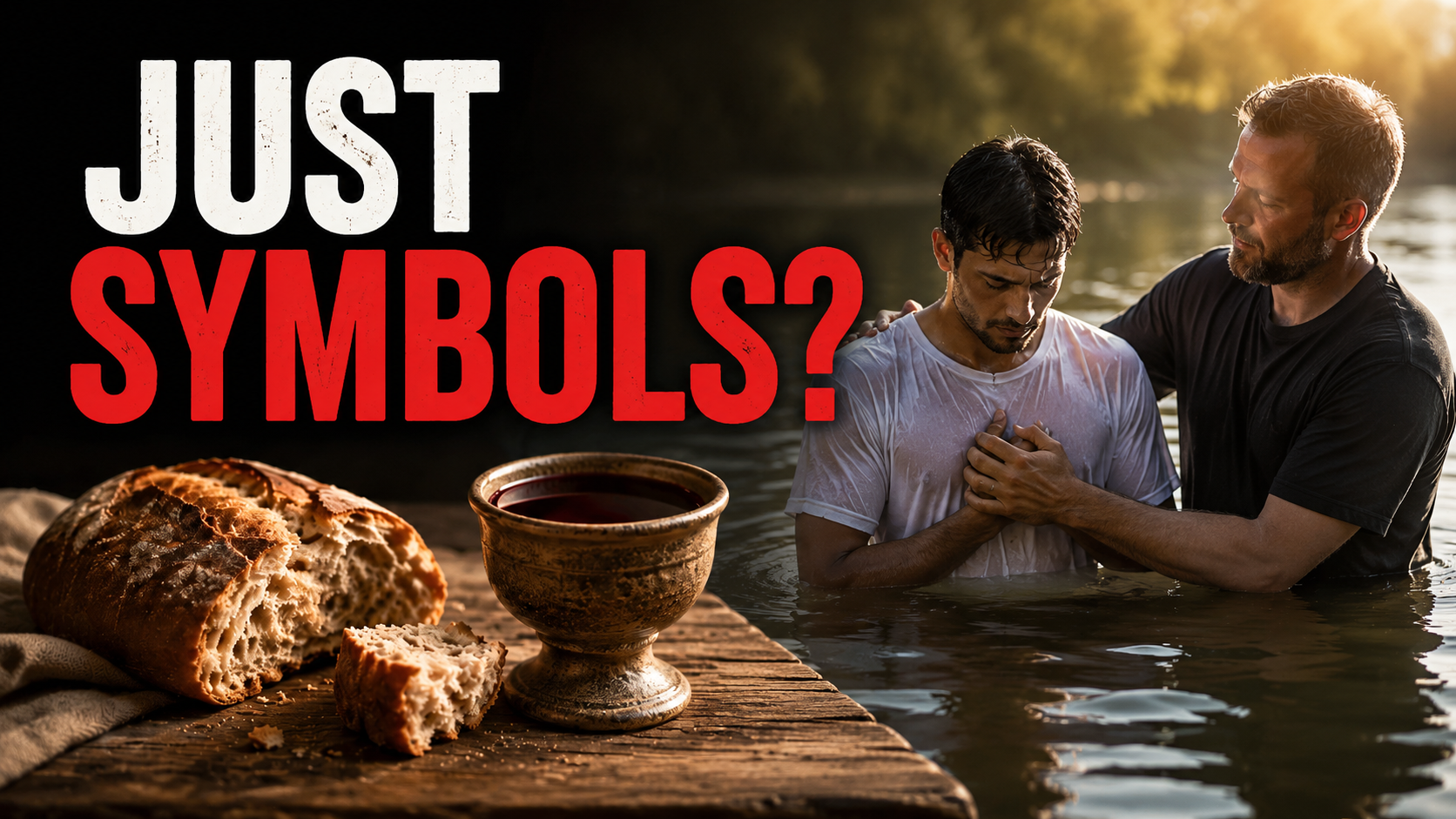
There is water.
There is bread.
There is wine.
We enter the water. We take the bread into our hands. We drink from the cup.
Chester writes that in the sacraments, truth is embedded in physical substances and then received through our bodies. We get wet. We eat. We drink.
That idea became one of the most memorable parts of the book for me.
Chester later describes Baptism and Communion as the Gospel in three dimensional form.
The truths being communicated are already familiar to Christians. We are sinners in need of grace. Christ died for our sins. He rose from the dead. Those who trust in him receive forgiveness and new life.
In the sacraments, those truths are placed before us in physical signs.
Chester explains that the water, bread, and wine serve as confirmations of God’s promises, engaging our senses so that our frail faith might be nurtured.
That final idea is important.
Our faith is frail.
God knows that.
So the Christian life includes more than abstract ideas. God gives his people tangible signs that direct us again toward his promises.
Paul describes the Gospel in Ephesians 2 by reminding believers that we were dead in our sins. Then, because of his mercy and love, God made us alive with Christ. Salvation is by grace through faith.
Now consider the physical picture presented in Baptism.
A person enters the water. The body disappears beneath the surface and rises again.
Death.
Burial.
New life.
Chester also points out something deceptively simple about Baptism.
We do not baptize ourselves.
We are baptized.
That observation stayed with me because of how well it fits the language of Ephesians 2.
We did not make ourselves alive.
God made us alive with Christ.
The Lord’s Supper gives us another physical expression of Gospel truth.
Bread is placed into our hands. We receive the cup. We eat and drink as we remember the body of Christ given for us and his blood shed for us.
The significance of these practices ultimately rests in God himself.
As Chester writes, their validity and power lie in the One who makes the promises.
That keeps the entire discussion grounded.
Being baptized does not automatically make someone a Christian. Eating bread and drinking from the cup does not automatically save anyone.
The physical signs have meaning because of the reality they proclaim and the promises of the God who gave them.
This became the foundation for everything else I appreciated about the book.
What Actually Happens During Communion?
One of the most helpful sections of Truth We Can Touch deals with a question Christians have debated for centuries.
What is happening when we celebrate the Lord’s Supper?
Are the bread and wine simply symbols that help us remember Jesus?
Is Christ actually present with us at the table?
Chester walks through several major positions and gives enough historical context to make the differences understandable without turning the book into a dense history of sacramental theology.
The Catholic View
The Catholic doctrine of transubstantiation teaches that the bread and wine become the body and blood of Christ in their substance while their outward appearance remains unchanged.
The elements continue to look, taste, and feel like bread and wine, while their true substance has changed.
Luther and the Presence of Christ
Martin Luther rejected transubstantiation while continuing to affirm the physical presence of Christ in the Lord’s Supper.
Chester connects Luther’s position to his understanding of Christ’s divine and human natures. According to Chester’s explanation, Luther believed that after the resurrection, the qualities of Christ’s divine nature were communicated to his human nature, allowing Christ to be physically present wherever he chose, including at Communion.
Zwingli and Remembrance
Ulrich Zwingli placed greater emphasis on Jesus’ command to do this in remembrance of him.
For Zwingli, the bread and wine function as signs that direct Christians toward Christ and his death.
This understanding will probably sound familiar to many evangelical Christians.
Communion often functions primarily as an act of remembrance. We take the bread and cup and consciously turn our thoughts toward the cross.
Chester actually devotes an entire chapter to the biblical idea of remembrance, so he does not treat remembering as insignificant.
Still, another historical view caught my attention far more.
Calvin and the Presence of Christ Through the Spirit
John Calvin believed that Christ is truly present with his people during the Lord’s Supper through the Holy Spirit.
This is the position I found myself most drawn to.
Christ has ascended bodily and sits at the right hand of the Father. Yet when Christians gather around his table, they are not merely thinking about someone who is absent.
Chester describes Communion as a moment when the Spirit connects the heavenly and earthly realms so that Christ truly feeds the hearts of his people with his presence.
That gave me a much richer understanding of the Lord’s Supper.
Christ invites his people to his table.
We gather around bread and wine that point us toward his body and blood. We remember his death. We proclaim the Gospel together. Through the Spirit, we also enjoy genuine fellowship with the living Christ.
That thought changed the way I approached Communion.
There should be reverence at the Lord’s Table.
There should be gratitude.
There should also be a deep awareness of why any of us have been invited there.
Chester writes that the point is not that we must make ourselves worthy to receive the bread and wine. The Supper is an invitation for sinners to receive grace.
That is an important distinction.
We do not approach the table because we have finally become impressive Christians.
We come because we need the grace being proclaimed there.
Does Baptism Save?
Baptism raises another major theological question.
Do you have to be baptized to be saved?
Chester’s answer is clear.
No.
He points to the thief on the cross as an obvious example of someone who was converted and received the promise of eternal life without ever receiving Christian Baptism.
At the same time, Chester refuses to treat Baptism as an optional accessory to the Christian life.
He describes it as an important reminder of Christ’s covenant commitment to his people and a declaration of our loyalty to Christ and his church.
I appreciate that balance.
Baptism does not make someone a believer. Salvation is by grace through faith in Christ.
Yet Baptism still matters deeply.
When a believer enters the water, that person responds in faith to the realities Baptism represents.
Baptism as Death, Judgment, and New Life
One of the images Chester develops is the idea of passing through the waters of judgment.
Throughout Scripture, water can carry the imagery of judgment, death, and deliverance.
In Baptism, we acknowledge our guilt before God and identify ourselves with Christ, who entered judgment despite his innocence and bore the penalty of sin on behalf of his people.
Paul writes in Romans 6:4:
“We were buried therefore with him by baptism into death, in order that, just as Christ was raised from the dead by the glory of the Father, we too might walk in newness of life.”
The physical action of Baptism gives that imagery remarkable force.
The believer disappears beneath the water in a picture of death and burial.
Then that person rises again.
New life.
Of course, entering water does not create that spiritual reality by itself.
The power of the image comes from what Christ has actually accomplished and the believer’s union with him.
Yet the symbol is far from empty.
And Chester spends considerable time explaining why.
Is Baptism Just a Symbol?
Calling Baptism symbolic can sometimes make it sound insignificant.
Chester argues that symbols can carry enormous weight.
Think about a wedding ring.
A wedding ring is a symbol, but nobody would conclude that it is therefore meaningless.
Think about the words “I do” spoken during a wedding ceremony.
They are words, yet those words publicly declare something about two people’s relationship and commitment.
Chester also uses the example of words spoken during a presidential inauguration. The actions involved are symbolic, but they publicly declare something real about a person’s identity and position.
He applies the same idea to Baptism.
Chester calls Baptism a naming ceremony.
That description particularly stood out to me.
In Matthew 28, Jesus commands his disciples to baptize people in the name of the Father, the Son, and the Holy Spirit.
Baptism publicly identifies a person with that name.
It announces belonging.
The person entering the water is publicly identifying with Christ and with Christ’s people.
There is a declaration of allegiance taking place.
This helped me understand why Chester can describe Baptism as a symbolic act while also saying that it changes a person’s status.
He has already made clear that the water itself does not convert someone or earn salvation.
The change he is describing concerns the person’s public identification with Christ and his people.
The believer is named.
The believer is marked out publicly as belonging to Jesus.
That is much richer than viewing Baptism as little more than a visual aid representing a private decision someone made earlier.
Why Truth We Can Touch Changed My View of the Sacraments
Before reading this book, I would never have said Baptism or Communion were unimportant.
I simply had not thought deeply enough about everything Jesus has given his church through them.
That is probably the greatest strength of Truth We Can Touch.
Chester helped me see the generosity of God in giving his people physical signs of spiritual realities.
God proclaims the Gospel through his Word.
In Baptism, we see death, burial, cleansing, and new life.
We enter the water identifying ourselves with Christ and bearing the name of the Father, Son, and Holy Spirit.
At the Lord’s Table, we take bread and wine into our hands. We remember the body given for us and the blood poured out for us. We gather as sinners who have been invited by Christ to receive the grace his death secured.
The water does not save us.
The bread and wine do not contain some independent magical power.
Their significance comes from the promises of God and the saving work of Jesus Christ to which they point.
They remind us who Christ is.
They remind us what he has done.
They remind us who we now belong to.
And they give physical expression to truths Christians confess with their mouths and believe in their hearts.
They become truths we can touch.
Is Truth We Can Touch Worth Reading?
Absolutely.
I would especially recommend Truth We Can Touch to Protestant Christians who have grown up practicing Baptism and Communion without spending much time thinking about why these practices matter.
Chester manages to introduce serious theological questions without making the discussion inaccessible. He engages historical disagreements, explores the biblical imagery behind the sacraments, and repeatedly brings the discussion back to the Gospel.
The book also gave me several ideas that I am still thinking through, particularly Calvin’s understanding of Christ’s presence at Communion and Chester’s description of Baptism as a naming ceremony.
Those ideas alone changed the way I think about participating in both practices.
If Baptism and Communion have become so familiar that they barely make us stop and think anymore, Truth We Can Touch is a worthwhile reminder that Jesus gave these practices to his church for a reason.
I do not think I will approach either of them quite the same way again.
What do you think?
How does your church understand Baptism and the Lord’s Supper?
Do you view Communion primarily as an act of remembrance, or do you believe Christ is truly present with his people at the table?
And what significance do you believe Baptism has in the life of a Christian?
I would love to hear your thoughts in the comments.
Leave a Reply